Tags: #notes
Links: Dashboard General Psychology
Memory
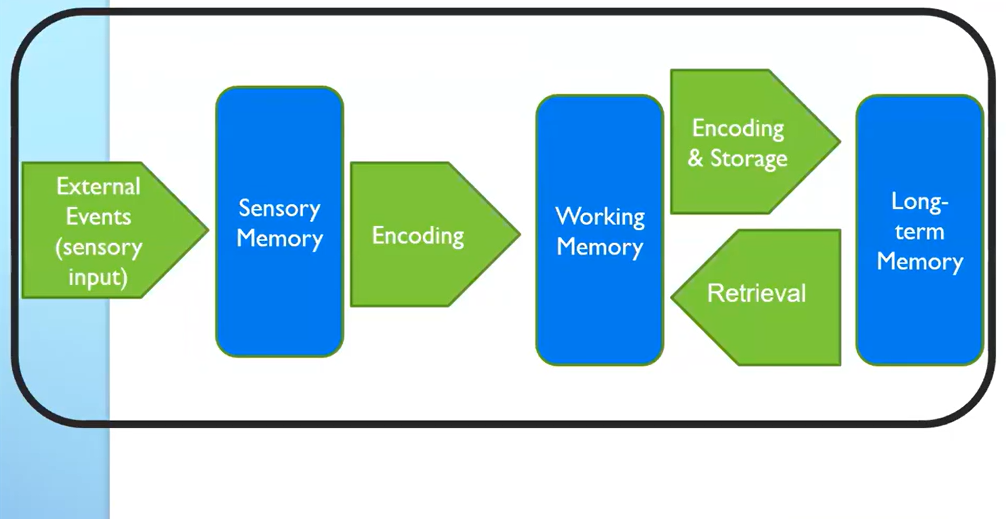
I 3 Memory Tasks
a. Encoding: putting info into memory
b. Storage; Keeping The info
c. Retrieval: calling up the info out of storage
II How does info get from the environment into our memory?
3 stages: Sensory -> Working memory -> Long-term memory
A. Sensory Memory
- Takes in all info from the environment through our senses
- Held 1/4th of a second to decide whether to pay attention
- Biology: neurons firing at sense organs and along pathways to the brain (not tested)
B. Working Memory (Short-term memory) (Thinking)
- Whatever you are paying attention to right now.
- Contents are from sensory memory (or long-term memory)
- Sorts and encodes info for putting into permanent storage
- Biology: neurons in frontal lobe
- Lasts 20-30 seconds
- Capacity 7+ or -2 (depends on type of info)
- Ex: 7 digits in a phone number easier with area code rather than remembering 10.
- New info coming in interferes with old info, and old info interferes with new info
- Question: Why is it dangerous to talk on a cell phone while driving?
- We can only pay attention to a few things at the same time. Attending to a phone convo causes interfereince-we can't take in new info about what's happening on the road!
C. Long-Term Memory
Everything you know
- Capacity: unlimited
Components
Delcaritive memory and procedural memory
- Procedural memory
- directions for well-practiced skills, e.g. riding a bike, typing
- Outside of awareness
- Declaritive Memory
- Facts and events
- Episodic Memory
- Personal Experiences
- Semantic Memory
- meaning of words and concepts, general knowledge
- eg the definition of "memory", how to explain synaptic transmission, that a cat is an animal
- Chart
III. Processing Information: Two Ways
A. Automatic processing.
Title: A. Some kinds of information we encode without ttrying. This is called Automatic processing.
Examples: the face of the person sitting next to you, the path from your bedroom to your front door
- What info do we process automatically?
- Personally relevant
- simple
- interesting
- space
- time
- We can't turn off auto processing
B. Effortful Processing
- We have to work at encoding in our memory
- Memorizing phone numbers, ssn, id
- And everything youre expected to learn in college
IV. Strategies for Learning Info That Requires Effortful Processing
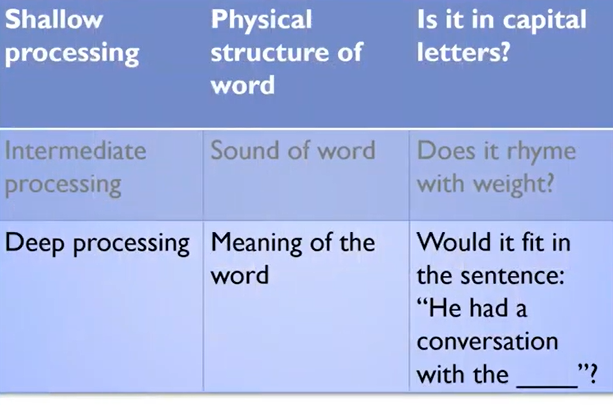
Levels of Processing
Deeper we process information the more we remember it. (Makes info more meaningful)
- Chart
V. Retrieval
A. Three Types of Retrieval
1. Recall- without clues
2. Recognition - know it when you see it
3. Relearning
B. Memories are stored in a web of association
C. Context is stored along with memories
- chart
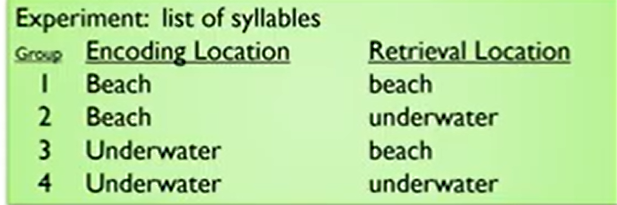
D. State dependent memory- Out internal condition (physiological) is also a retreival cue
Eg Mood, sober bs intoxication - Memories encodedi n a condition are retrieved more easily when in the same condition
Study Tips
- Choose to be interested in what you are studying.
- Why? This will cause you to automatically learn some of the info.
- Relate the info to yourself to give it personal meaning
- Understand the meaning of words/odeas so you can deeply process them.
- Ebbinghaus--learning meanifu info requires only 1/10th the time it takes to learn nonsense info
- Chunk info into units (social security number)
- Spread out study time. (Material learned over time is learned more thoroughly)
- Don't sudy for more than 60 to 90 minutes without break
1. Effortful processing is work and takes energy - Speand most of your study time practicing retrieving the info
- Use flashcards
1. Overlearn--keep reviewing even after you know the info - If you have trouble retrieving an answer to a test question, turn the paper over and try brainstorming.
- Study some in the room you'll be tested in
- Study and then sleep to avoid interference