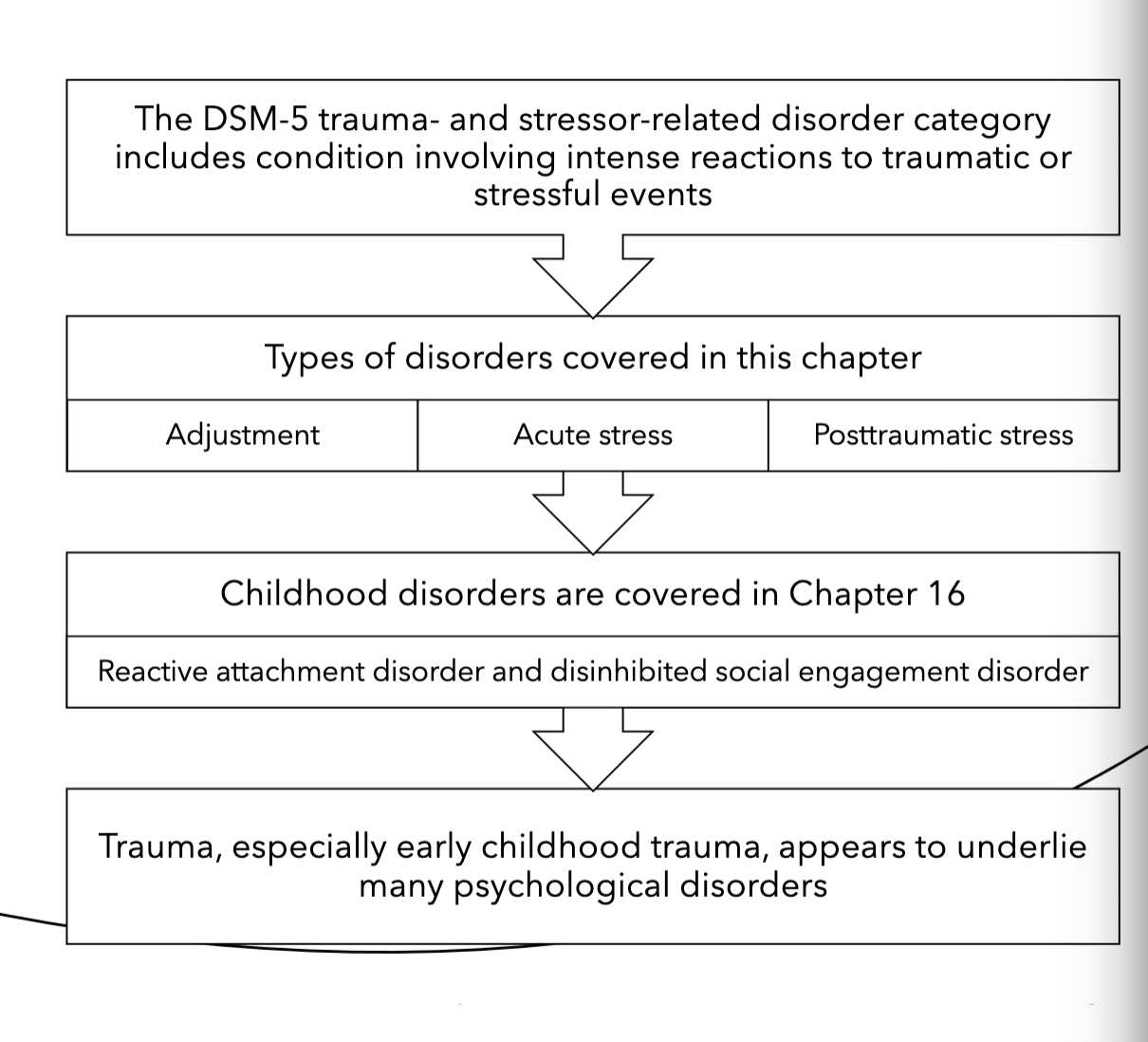
Adjustment Disorder
- Exposure to a stressor of any type or severity
- Symptoms begin within 3 months of exposure to the stressor
- Lasts no longer than 6 months after termination of the stressor or consequences from the stressor
- Can diagnose after, rule out other problems
- Does not stay with a person long term, shouldn't be as impairing as other disorders
- This individual has difficulty coping with this stressor
- It exceeds the normal level of difficulty coping
Specifiers
- With Depressed Mood
- This specifier is used when the primary symptom of the adjustment disorder is depressed mood, such as feelings of sadness, tearfulness, or hopelessness, often in response to a stressor.
- With Anxiety
- This specifier is used when the primary symptom is anxiety, which could include nervousness, worry, jitteriness, or fear that is triggered by the stressful event.
- With Mixed Anxiety and Depressed Mood
- This specifier applies when the person experiences both anxiety and depression in response to the stressor. The individual may feel both worried and sad or hopeless at the same time.
- With Disturbance of Conduct
- This specifier is used when the individual shows behavioral problems such as aggression, violation of social norms, or other disruptive behaviors that are a reaction to the stressor. For example, an individual may act out by fighting, being destructive, or engaging in risky behaviors.
- With Mixed Disturbance of Emotions and Conduct
- This specifier applies when both emotional symptoms (like anxiety or depression) and behavioral disturbances (like conduct problems) are present. For example, a person may show both emotional dysregulation and disruptive behaviors, such as acting out aggressively while also feeling sad or anxious.
Acute Stress Disorder
- Direct or indirect exposure to a traumatic stressor involving actual or threatened death, serious injury, or sexual violence
- Disturbance persists from 3 days to 1 month after exposure to trauma
- Diagnosis before ptsd: after 1 month it's ptsd
- Many people do not develop PTSD, most recover
Posttraumatic Stress Disorder (PTSD)
- Direct or indirect exposure to a traumatic stressor involving actual or threatened death, serious injury, or sexual violence.
- Symptoms are present for at least 1 month
- Twice as prevalent in women
- Low prevalence in Asian Americans
- Higher prevalence in Latinx and African Americans
- Symptoms may vary cross-culturally
Trauma-Related Disorders
Typical outcomes after exposure to traumatic incidents
- Resilience
- Can maintain life, not thrown out of balance
- Recovery
- Initial distress with symptom reduction over time
- Delayed symptoms
- Few initial symptoms
- Increasing symptoms over time
- Chronic symptoms
Diagnosis of Acute and Posttraumatic Stress Disorders
Requirements for diagnosis (Symptoms longer than 1 month for PSTD)
- Direct or indirect exposure to traumatic event
- Intrusion symptoms (1+)
- Nightmares or distressing dreams related to the trauma.
- Flashbacks, where the individual feels as though the traumatic event is happening again.
- Intense or prolonged psychological distress at exposure to reminders of the trauma (e.g., anniversaries, similar situations).
- Marked physiological responses to reminders of the trauma (e.g., rapid heartbeat, sweating).
- Intrusive memories of the traumatic event that are distressing and involuntary.
- Avoidance (1+)
- Avoidance of trauma-related thoughts, feelings, or memories.
- Avoidance of trauma-related external reminders (e.g., places, people, conversations, or objects that trigger memories of the event).
- Negative alterations in mood or cognition (2+)
- Persistent negative beliefs about oneself, others, or the world (e.g., "I am bad," "The world is dangerous").
- Persistent, distorted thoughts about the cause or consequences of the traumatic event, leading to self-blame or blaming others.
- Persistent negative emotional state (e.g., fear, anger, shame, guilt).
- Markedly diminished interest or participation in significant activities.
- Feeling detached or estranged from others (emotional numbness).
- Inability to experience positive emotions (e.g., happiness, satisfaction, or love).
- Arousal and changes in reactivity (2+)
- Irritability or anger outbursts, often disproportionate to the situation.
- Hypervigilance, or being excessively alert for potential danger.
- Exaggerated startle response, reacting strongly to sudden noises or movements.
- Problems with concentration or difficulty focusing.
- Sleep disturbances, including trouble falling or staying asleep.
Clinicians also specify if there are recurrent symptoms of depersonalization, derealization, or dissociation
ASD involves symptoms that persist for at least 3 days but no longer than 1 month (between 12 percent and 26 percent of adults who experience a traumatic event)
Etiology of ASD and PTSD
Factors associated with increased risk
- More severe physical injuries
- Injury to the head or extremities
- Major burn injuries
- Rape or sexual assault
- PTSD more likely when there is intentional trauma and when there is a close relationship with the perpetrator of sexual assault
Biological Dimension of ASD and PTSD
Body sytsems designated for homeostasis
Some people are more prone to physiological reactivity
- The amygdala sends out a signal to the prefrontal cortex and the sympathetic nervous system
- HPA axis then releases hormones to prepare the body for “fight or flight”
Fear extinction
- Many people with PTSD exhibit minimal fear extinction
- Trauma-related fear responses do not decline with the passage of time
- Stress hormone changes to the brain, orbitofrontal cortex alterations, and genetic differences are possibly implicated
Psychological dimension
- Preexisting conditions such as anxiety and depression, hostility, and anger
- A tendency to generalize trauma-related stimuli to other situations
- Specific cognitive styles or dysfunctional thoughts
- Reframing traumatic events in a more positive light, and optimistic thinking can increase resilience
Social Dimension
- Social support can diminish PTSD symptoms
- Less-than-optimal social support during childhood can increase risk
Sociocultural Dimension of ASD and PTSD
Ethnic Differences
- Race-based discrimination can produce psychological trauma
- Different exposure to previous trauma
- Cultural differences in responding to stress
- Women are twice as likely as men to suffer a trauma-related disorder
- Female police officers less likely than civilian women to have PTSD symptoms
Medication Treatment for Trauma-Related Disorders
Certain antidepressants (SSRI) show some effect
- Effective in fewer than 60 percent of individuals
- Only 20–30 percent show full recovery
D-cycloserine and Prazosin (hypertension medication) - Mixed results
Propranolol (beta-blocker) - Appears to produce significant improvement in sleep quality and reductions in symptoms of hyperarousal
MDMA - Has shown some promise when combined with exposure-based therapy
- Supresses emotional memory circuits involved with intrusive memories
- Allows exposure therapy without overwhelming patient with fear
Psychotherapy for Trauma-Related Disorders
- Cognitive-behavioral therapies are the most effective form of treatment for PTSD (CBT)
- Prolonged exposure therapy (PE)
- Involves exposure to trauma-related cues
- Cognitive-behavioral therapy (CBT and TF-CBT)
- Involves identifying and challenging dysfunctional cognitions
- TF-CBT applies trauma-sensitive principles
- Eye movement desensitization and reprocessing (EMDR)
- A nontraditional therapy combined with CBT used to treat PTSD
Psychological Factors Affecting Medical Conditions
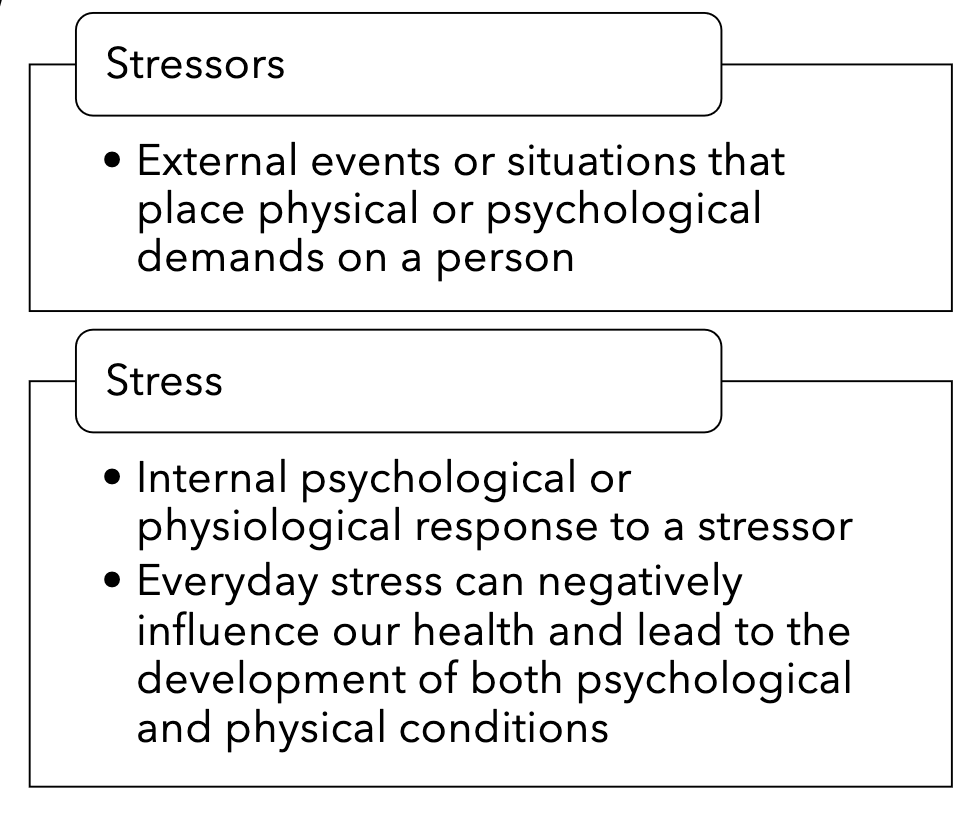
Stress
- Causes a multitude of physiological, psychological, and social changes that influence health
- Study on stress and the COVID-19 pandemic revealed high levels of stress, particularly among parents
- People of color reported the highest levels of stress
Psychophysiological disorder
- Physical disorder with a strong psychological basis or component
Medical Conditions Influenced by Psychological Factors
- Actual tissue damage
- Disease process
- Physiological dysfunction
- Relative contributions of physical and psychological factors vary greatly
- Both medical treatment and psychotherapy may be required
Coronary Heart Disease
Cardiac Arteries Narrow
- Results in complete or partial blockage of flow of blood and oxygen to heart
Some Risk Factors for CHD
- Poor eating habits
- Obesity and lack of physical activity
- Hypertension
- Stress
- Depression
Hypertension
- Normal blood pressure —Systolic lower than 120 and Diastolic lower than 80
- Hypertension — Systolic at or above 140 or Diastolic at or above 90
- About 116 million (45 percent) of U.S. adults have high blood pressure requiring treatment
Migraine, Tension, and Cluster Headaches
Headaches are among the most common stress-relate psychophysiological complaints
Headaches preceded by aura in about 20 percent of cases
Migraine headaches — 20 percent of the U.S. population
- Neurologically based head pain accompanied by symptoms such as nausea, and vomiting
- Prevalence of severe migraines is highest in American Indians
- Three to four times more common in women compared to men
- Brain scans of people with migraine show hypersensitivity in the visual cortex
Tension Headaches
- Stress creates a prolonged contraction of scalp and neck muscles
- Results in vascular constriction and steady pain
- Most common form of headache
- Approximately 70 percent of adolescents and adults experience tension headaches each year
- Account for more days missed at work than migraine headaches
Cluster Headaches
- Excruciating stabbing or burning sensations located in the eye or cheek
- Pain so severe that 55 percent report suicidal thoughts
- Affecting about 1 in 1,000 adults
- Six times more prevalent in men
- Attacks have a rapid onset
- 15 minutes to 3 hours in duration
- End abruptly
Asthma
- Chronic inflammation disease of lungs
- mild - severe symptoms
- Stress or other triggers cause excessive mucus secretion
- Affects 8.2% of US pop.
Etiological Influences on Physical Disorders
Biological dimension
- Stressors can dysregulate physiological processes in the brain and body
- Release of norepinephrine, epinephrine, and cortisol
- Early environmental influences may produce changes in stress-response systems
- Brief exposure to stressors enhances immune functioning
- Genetic influences contribute to psychophysiological disorders
- Purer African ancestry increases the risk of developing severe asthma among men
- Twin studies have estimated the heritability of asthma to be around 35 percent
Psychological Dimension
Psychological and personality characteristics can influence health
status
- Positive emotions help regulate stress reactions
- Negative emotions accentuate the stress response
- Hostility is associated with several psychophysiological disorders
- Control and the perception of control over the environment and its stressors can mitigate the negative effects of stress
Social Dimension
- Social stressors can influence immunological functioning and produce undesired health outcomes
- Good relationships moderate the link between hostility and poor health
- Social isolation is more likely to negatively affect the health of women
- Risk factors for adverse health outcomes
- Lack of social support
- Maltreatment in social relationships
Sociocultural Dimension
Sociocultural factors associated with gender, race, or ethnicity can have a major impact on health
Women are more likely to be impacted by stress
- Due to care-giving role for children, partners, and parents
- More likely to live in poverty
- Chronic disparities associated with having limited economic resources
Stressful experiences associated with race and ethnicity - Stressors of living in poverty and having limited access to medical care mitigate vascular reactivity to discrimination
- Achieving upward mobility is associated with an increased likelihood of social isolation and experiences of racism and discrimination
Treatment of Stress-Related Disorders
Relaxation training
- Learn to relax muscles of the body under almost any circumstances
Biofeedback training - Learn to voluntarily control physiological processes in order to improve physical or mental health
- Examples: heart rate, blood pressure
- Visual and auditory feedback reinforces relaxation responses
CBT
Designed to improve coping skills and manage stress
- CBT has proven effective in controlling asthma symptoms and reducing anxiety levels
- Mindfulness-based stress reduction programs, designed to help foster nonjudgmental awareness of sensations and feelings
- Produces significant decreases in stress, anxiety, depression, and physiological markers associated with stress
- Acceptance and commitment therapy (ACT)