Summary
Chapter Two delves into the basic neuroanatomy of the nervous system, focusing on large-scale anatomical directional terms necessary for understanding the structure and organization of the brain. The chapter begins with a discussion on directional terminology like anterior, posterior, superior, inferior, rostral, caudal, dorsal, and ventral, using a corn snake as an illustrative model. This is followed by an examination of the various planes of sectioning the brain—sagittal, horizontal, and coronal—each providing unique insights into brain structure. The chapter also addresses the protective meninges surrounding the brain, cerebrospinal fluid (CSF), and the blood supply to the brain, emphasizing the critical role of these systems in maintaining brain health and function.
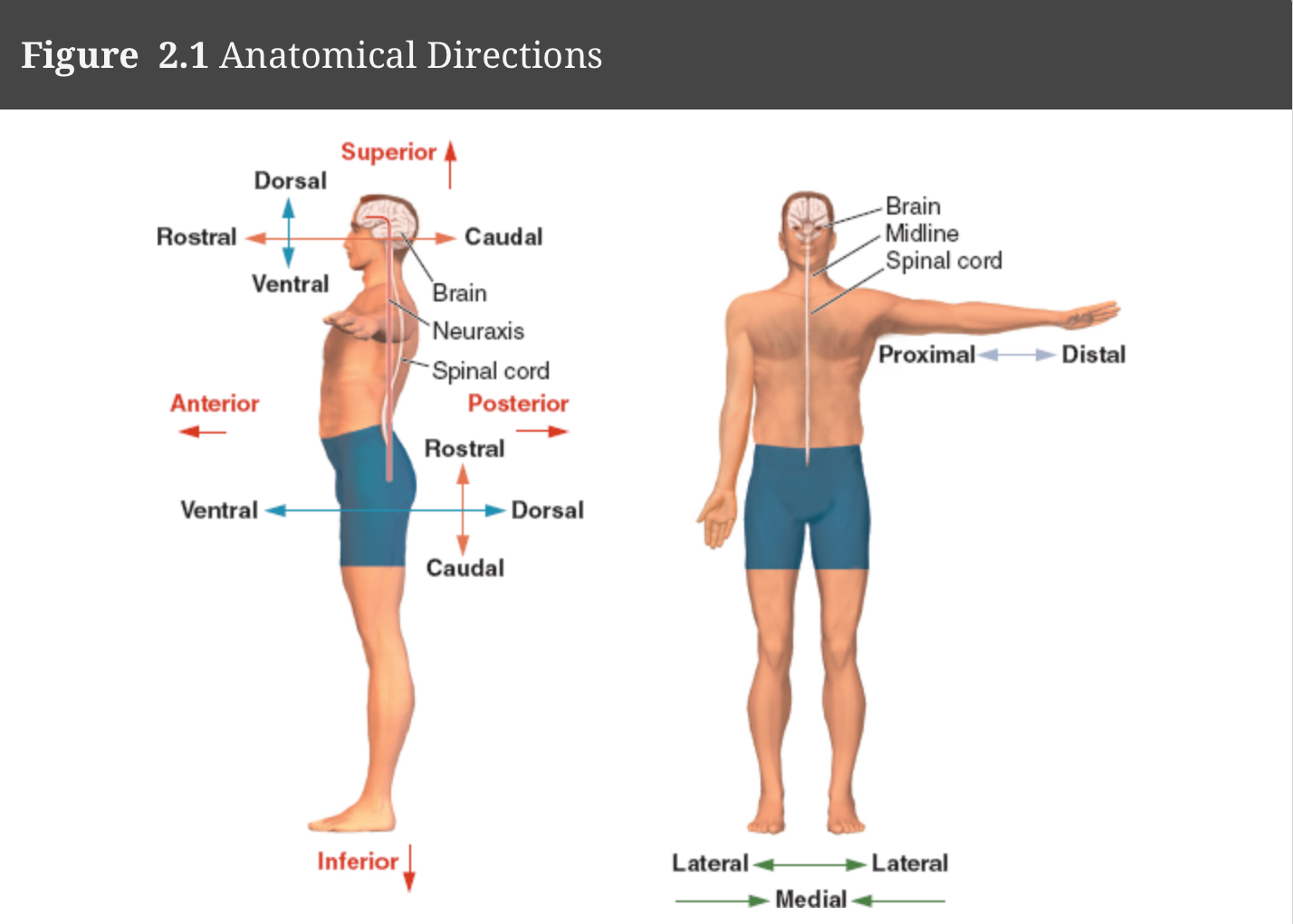
Directional Axes in the Brain
Overview
Understanding the directional axes in the brain is essential for grasping neuroanatomy. There are two primary systems of directional terms used by anatomists:
- Anterior-Posterior-Superior-Inferior System
- Rostral-Caudal-Ventral-Dorsal System
1. Anterior-Posterior-Superior-Inferior System
-
Definition: This system provides fixed references relative to the position of the organism, similar to the walls, ceiling, and floor of a room.
-
Terms:
- Anterior: Refers to the front of the organism.
- Posterior: Refers to the back.
- Superior: Indicates the top.
- Inferior: Indicates the bottom.
-
Application: These terms remain constant regardless of the animal’s position, allowing for consistent communication about brain structures, such as the superior and inferior colliculi located in the midbrain.
2. Rostral-Caudal-Ventral-Dorsal System
-
Definition: This system is dynamic and changes based on the orientation of the organism, particularly relevant in the context of the human neuraxis.
-
Terms:
- Rostral: Indicates direction toward the head.
- Caudal: Indicates direction toward the tail.
- Dorsal: Refers to the back; when the organism’s head is turned, this may also refer to the top of the head.
- Ventral: Refers to the belly side; this may also extend to the chin area.
-
Application: This distinction is particularly important for understanding the orientation of the human brain, which bends due to our bipedal posture, making the neuraxis an imaginary line that describes the trajectory of the nervous system.
Highlights
- 🐍 Directional Terms: Understanding anterior, posterior, superior, and inferior terms is essential for anatomical orientation.
- 🧠 Neuraxis Concept: The neuraxis illustrates how directional terms change in relation to body orientation in different species.
- ✂️ Planes of Section: Different sections (sagittal, axial, coronal) reveal unique aspects of brain anatomy, similar to viewing a globe in 2D.
- 🛡️ Meninges Layers: The brain is protected by three layers of meninges: dura mater, arachnoid membrane, and pia mater.
- 💧 Cerebrospinal Fluid: CSF cushions the brain, circulates nutrients, and removes waste, vital for neurological health.
- 🚑 Hydrocephalus: A condition where excess CSF can lead to brain development issues if not treated early.
- ❤️ Blood Supply Importance: The brain’s function relies heavily on a robust blood supply, with specific arteries serving critical areas.
Key Insights
-
🧭 Understanding Anatomical Language: Mastering directional terms is crucial for students and professionals in neuroscience. These terms provide a consistent framework for discussing and studying brain structures.
-
📏 Sagittal vs. Coronal Sections: The choice of sectioning plane directly influences the visibility of specific brain structures, which is vital for both anatomical education and clinical practices.
-
🕷️ Meninges and Immune Response: Recent research indicates that the brain is closely tied to the immune system, challenging earlier beliefs of its immune isolation, highlighting the importance of understanding meningitis and its implications.
-
🧪 Role of CSF in Brain Function: The function of cerebrospinal fluid extends beyond cushioning; it plays a role in nutrient transport and waste removal, underscoring the interconnectedness of systems within the brain.
-
🧠 Hydrocephalus Implications: The case of individuals with hydrocephalus illustrates the brain’s remarkable adaptability and the importance of timely medical intervention to mitigate developmental challenges.
-
🩸 Consequences of Blood Supply Interruption: Knowledge of the brain’s vascular anatomy is essential for understanding strokes and their effects, emphasizing the need for quick medical responses to vascular accidents.
-
🔄 Circle of Willis: This anatomical feature serves as a crucial safety mechanism for the brain by redistributing blood flow, highlighting the importance of vascular health in neurological function.
Outline
-
Introduction to Neuroanatomy:
- Overview of neuroanatomy and its significance.
- Introduction of directional terms using a corn snake as a model.
-
Directional Terms Explained:
- Definition and explanation of terms: anterior, posterior, superior, inferior, rostral, caudal, dorsal, ventral.
- Comparison between fixed anatomical terms and those that change with body orientation.
-
Planes of Section:
- Description of the three main planes: sagittal, axial (horizontal), and coronal.
- Sagittal Plane: This vertical plane divides the brain into left and right halves. It allows for the examination of structures such as the corpus callosum, thalamus, and lateral ventricles in detail. Viewing the brain in this plane is crucial for understanding midline structures and asymmetries.
- Axial (Horizontal) Plane: This plane slices the brain horizontally, providing cross-sectional views from the top down. It’s essential for assessing structures like the basal ganglia, brainstem, and cerebellum. Axial imaging is particularly useful in detecting lesions, tumors, or hemorrhages as it offers a comprehensive view of the brain’s interior.
- Coronal Plane: This vertical plane divides the brain into anterior (front) and posterior (back) sections. It’s invaluable for visualizing the brain’s surface structures and relationships, such as the frontal lobes, temporal lobes, and the orientation of the ventricles. Coronal views are often employed in the assessment of brain disorders and surgical planning.
- Importance of choosing the right plane for visualizing brain structures.
-
Meninges and Their Functions:
- Description of the three layers of meninges (dura mater, arachnoid membrane, pia mater).
- Discussion on the role of these membranes in protection and connection to the immune system.
-
Cerebrospinal Fluid (CSF):
- Explanation of the production, circulation, and importance of CSF.
- Overview of conditions such as hydrocephalus and their implications for brain development.
-
Blood Supply to the Brain:
- Discussion on major arteries supplying the brain and the importance of maintaining blood flow.
- Introduction to the Circle of Willis and its function in vascular health.
-
Conclusion:
- Recap of the importance of understanding neuroanatomy for both academic and medical contexts.
Keywords
- Neuroanatomy
- Directional Terms
- Meninges
- Cerebrospinal Fluid
- Hydrocephalus
- Blood Supply
- Circle of Willis
FAQs
-
Q1: What are the main directional terms used in neuroanatomy?
A1: The main directional terms include anterior, posterior, superior, inferior, rostral, caudal, dorsal, and ventral. -
Q2: Why is it important to understand the planes of section?
A2: Understanding the planes of section allows for better visualization and understanding of brain structures, which is crucial for education and clinical practice. -
Q3: What role does cerebrospinal fluid play in brain health?
A3: CSF cushions the brain, circulates nutrients, removes waste, and plays a vital role in maintaining neurological health. -
Q4: How does hydrocephalus affect brain development?
A4: Hydrocephalus can lead to increased pressure on the brain due to excess CSF, potentially hindering brain development if not treated early. -
Q5: What is the Circle of Willis and why is it important?
A5: The Circle of Willis is an arterial structure that provides collateral circulation to the brain, helping to minimize damage from vascular blockages.
Core Concepts
-
Neuroanatomy Fundamentals: A fundamental understanding of neuroanatomy requires familiarity with directional terms and anatomical planes, which serve as the foundation for further studies in neuroscience.
-
Protective Mechanisms: The brain is safeguarded by multiple layers of meninges, CSF, and a robust vascular system, each playing a critical role in maintaining its function and health.
-
Interconnectivity of Systems: The relationship between the brain, immune system, and cerebrospinal fluid emphasizes the complexity of neuroanatomy and the need for an integrated approach to understanding brain health.
-
Clinical Implications: Knowledge of neuroanatomy has significant clinical applications, particularly in diagnosing and treating conditions like hydrocephalus or stroke, demonstrating the importance of anatomical understanding in medical practice.
-
Research Developments: Advances in neuroanatomical research, particularly regarding immune interactions and cerebrospinal fluid dynamics, continue to evolve our understanding of brain function and disease.